Documentary film:
Aral: Floods vs. Desert
Every year Kazakhstan faces severe floods, when rivers overflow their banks, inundating villages and carrying away tons of water. At the same time, the country's southern regions suffer from drought, and the Aral Sea continues to disappear. But is it possible to solve both of these problems at once?
Thanks to the initiative and funding of philanthropist Zhanbolat Urakovich Nadyrov, founder of the International Foundation for the Revival of the Caspian-Aral Basin Ecosystem and Flood Management (ICABER), the documentary film “Aral: Floods vs. Desert” was made. Zhanbolat Urakovich personally led the expedition and sponsored the feasibility study of projects exploring the possibility of diverting floodwaters to arid regions to combat desertification and restore the Aral Sea.
In the film you will see unique footage from the expeditions, interviews with experts and local residents, and details of how scientific and innovative approaches can turn the destructive forces of nature into a source of life for parched lands. Watch the full film and learn more about how the Aral can be given a second chance.
#Aral#Floods#Drought#Ecology#WaterResources#EcosystemRestoration#Innovation#Kazakhstan#DocumentaryFilm#NatureProtection#NatureConservation
Aral: Floods vs. Desert. Part 2
The rational use of water resources is becoming one of the key issues for Kazakhstan's sustainable development. Every year, spring floods inundate settlements, destroy infrastructure and cause the loss of huge volumes of fresh water. At the same time, the country's southern regions experience a chronic shortage of water resources, and the Aral Sea remains a symbol of one of the largest environmental disasters of our time.
Continuing our exploration of this problem, we present the second part of the documentary film “Aral: Floods vs. Desert”.
The new expedition is devoted to studying existing waterways, hydraulic structures and the possibilities of redistributing floodwaters to Kazakhstan's arid areas. The film examines engineering solutions that could not only mitigate the consequences of spring floods, but also provide additional water for agriculture, restore degraded land and contribute to the revival of the Aral Sea ecosystem.
During the expedition, specialists analyze the condition of canals, rivers and reservoirs, assess the prospects for building new hydraulic facilities and discuss possible scenarios for efficient water resource management. Particular attention is paid to practical solutions capable of turning the annual floodwaters from a source of destruction into a strategic resource for the country's development.
We are convinced that solving the water problem requires a comprehensive approach that combines scientific research, modern engineering technologies and strategic state planning. That is why the “Aral: Floods vs. Desert” project aims not only to draw attention to existing environmental challenges, but also to find real ways to address them.
We invite you to watch the second part of the documentary film and join us in looking at the prospects for the rational use of floodwaters as one of the most important resources for Kazakhstan's future.
Aral #Floods #Drought #Ecology #WaterResources #AralSea #Kazakhstan #DocumentaryFilm #EcosystemRestoration #SustainableDevelopment
Deputies propose making efficient use of floodwater
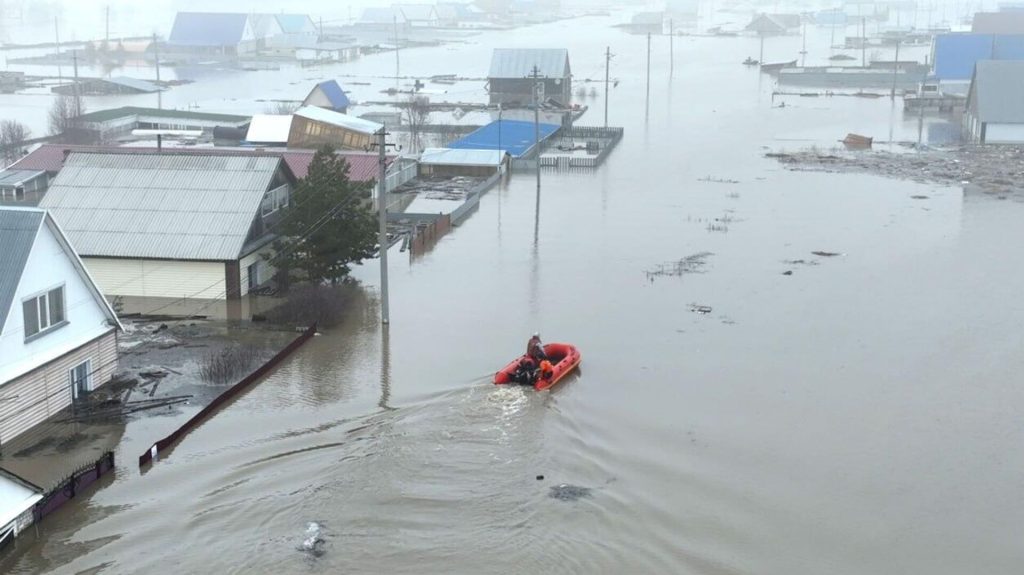
The devastating floods of 2024 alone cost the state at least 200 billion tenge.
At a plenary session of the Mazhilis, members of the AMANAT party faction B. Beisengaliyev, A. Rau, D. Turganov and M. Zhaiymbetov sent an inquiry to Prime Minister Olzhas Bektenov on the efficient use of floodwater, reports Aikyn.kz.
The inquiry was read out by Berik Beisengaliyev, a member of the AMANAT faction. According to him, the devastating floods of 2024 alone cost the state at least 200 billion tenge. But the main problem, he said, is that we still cannot effectively collect, store and use that floodwater.
– Head of State Kassym-Jomart Tokayev has repeatedly noted that the water issue is a strategic matter directly linked to national security. According to the President, by 2040 Kazakhstan's water deficit could reach 12–15 billion cubic meters.
This is not simply an environmental problem. It is a critically important factor affecting the future of agriculture, food security, energy, industry and entire regions. Today Kazakhstan stands between two major threats. On the one hand, every spring we battle billions of cubic meters of floodwater. On the other, in summer we suffer from drought. The devastating floods of 2024 alone cost the state at least 200 billion tenge. But the main problem is that we still cannot effectively collect, store and use that floodwater.
According to experts, in some waterways and canals 50–60 percent of the water is lost to the steppe. From the Yesil (Ishim) River alone, 4–5 billion cubic meters of floodwater flow away unused every year. For example, the construction of the Qosh Tepa Canal in Afghanistan may significantly affect the water balance of Central Asia in the future and reduce the volume of water reaching the Syr Darya basin. This further heightens the strategic importance of water security for Kazakhstan. In this situation, Kazakhstan needs long-term, bold and strategic decisions.
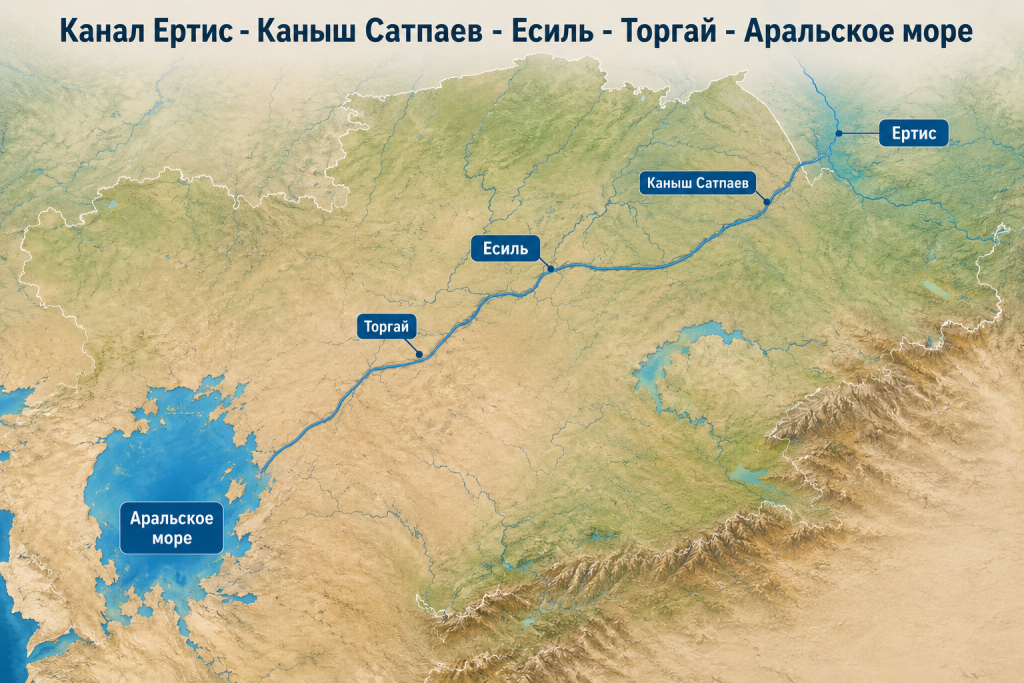
I therefore believe that a water transfer project along the “Irtysh – Kanysh Satbayev Canal – Yesil – Torgai – Aral Sea” route should be considered at the state level. The main advantage of this project is that the water would flow as far as possible along natural gradients and natural channels, so it would not require many expensive pumping stations and energy costs would be low. At the same time, diverting excess floodwater would make it possible to reduce the flood risk along the Yesil, – he said.
The deputy said that the International Foundation for the Revival of the Caspian-Aral Basin Ecosystem and Flood Management (ICABER) has developed a project to link these rivers through their natural channels with minimal use of pumping stations and is ready to implement it.
If the project is implemented, it will make it possible to:
– collect floodwater and use it efficiently;
– revive liman (flood) irrigation in the above-mentioned regions;
– strengthen the fodder base for livestock farming;
– supply water to new mineral deposits;
– develop fisheries;
– preserve the ecological stability of the Northern Aral.
World experience has proven the effectiveness of such large-scale water projects. For example, China redistributes water resources between regions through the South–North Water Transfer project, while in the USA the Tennessee Valley Authority program has made it possible to develop the economies of entire regions through effective river management. The Netherlands, through its Delta Works system, has made water security a national strategic priority. In other words, developed countries regard water infrastructure not as an expense but as a strategic investment in the country's future.
Kazakhstan, too, needs to approach water policy from exactly this kind of state and strategic perspective. The need to bring in advanced scientific methods and technologies to save our natural resources, including increasing the volume of the northern part of the Aral Sea and maintaining the water balance, is explicitly set out in the AMANAT party's “Together with the People” program for 2023–2027. In this regard, I ask the Government to consider: first, conducting a comprehensive technical, economic and environmental study of the “Irtysh – Kanysh Satbayev Canal – Yesil – Torgai – Aral Sea” project; and second – assessing the project's impact on food, energy and economic security, calculating its potential for expanding irrigated land and developing livestock farming, and examining the possibility of supplying water to new mineral deposits, – he said.
#Water#Flood#Ecology
Project to redistribute floodwaters in Kazakhstan proposed in the Mazhilis
Berik Beisengaliyev, a deputy of the AMANAT party faction, sent a parliamentary inquiry to Prime Minister Olzhas Bektenov raising the issue of the efficient use of floodwaters and the development of the country's strategic water infrastructure.
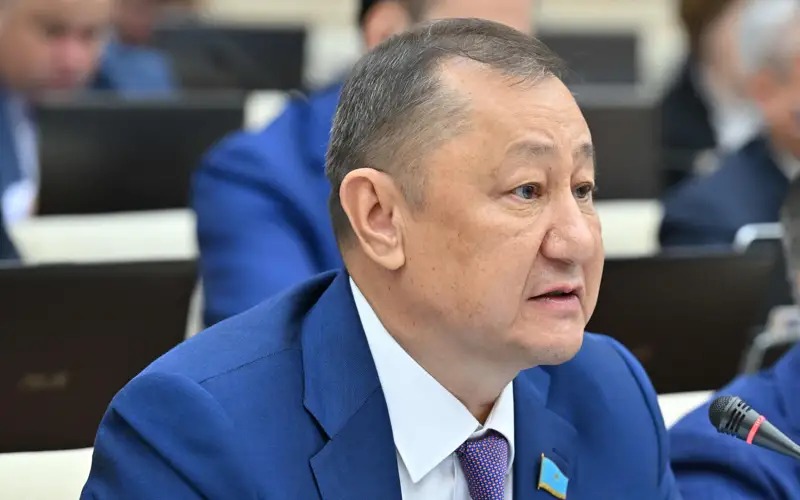
According to the deputy, by 2040 Kazakhstan's water deficit could reach 12–15 billion cubic meters, which directly affects agriculture, energy and regional development.
— This is not simply an environmental problem. It is a factor affecting food security, energy, industry and the future of entire regions. Today Kazakhstan finds itself between two major challenges: on the one hand, annual floods bringing billions of cubic meters of water; on the other, summer droughts. And yet we still cannot effectively collect and use floodwaters, — the deputy noted.
According to data cited in the inquiry, a significant share of floodwater is lost: in some canals up to 50–60% of the water goes to waste, and up to 4–5 billion cubic meters may flow away every year from the Yesil River alone. As a possible solution, the deputy proposed considering a large-scale infrastructure project along the “Irtysh — Kanysh Satbayev Canal — Yesil — Torgai — Aral Sea” route.
— If the project is implemented, it will make it possible to collect floodwaters efficiently, restore liman irrigation, strengthen the fodder base for livestock farming, supply water to new mineral deposits, develop fisheries and support the ecological stability of the Northern Aral. International practice shows that similar projects in China, the USA and the Netherlands have proven their effectiveness. Kazakhstan should also regard water infrastructure as a strategic investment in the future, — the parliamentary inquiry states.
The deputy also proposes carrying out a comprehensive feasibility and environmental study of the project, assessing its impact on food and energy security, and considering the possibility of including the initiative in the list of the country's strategic infrastructure projects. #Aral#Floods#Drought#Ecology#WaterResources#EcosystemRestoration#Innovation#Kazakhstan#DocumentaryFilm#NatureProtection#NatureConservation
On the water transfer project along the “Irtysh – Kanysh Satbayev Canal – Yesil – Torgai – Aral Sea” route
Today, at the plenary session of the Mazhilis, I sent a parliamentary inquiry to Prime Minister Olzhas Bektenov on the efficient use of floodwaters and Kazakhstan's long-term water security, an issue of the utmost importance for our country's future.
President Kassym-Jomart Kemelevich Tokayev has repeatedly pointed to the water problem as a strategic area directly linked to national security. According to experts, by 2040 Kazakhstan's water deficit could reach 12–15 billion cubic meters.
Today we are living in a paradox:
in spring we battle billions of cubic meters of floodwater, and in summer many regions suffer from drought.
Unfortunately, Kazakhstan has not yet been able to fully collect and store floodwaters or develop a system for their efficient use.
For example, last year more than 8 billion cubic meters of water flowed from the Sergeevka Reservoir down the Yesil into Russia. This is several times the capacity of the reservoir.
That is why, in my parliamentary inquiry, I proposed considering the water transfer project along the “Irtysh – Kanysh Satbayev Canal – Yesil – Torgai – Aral Sea” route at the state level.
This is not just about building a canal.
It is a strategic project for Kazakhstan's future water security.
At present, the feasibility study for the project has been developed on behalf of the International Foundation for the Revival of the Caspian-Aral Basin Ecosystem and Flood Management (ICABER).
The project envisages:
• a 42-km canal on the Yesil–Torgai route;
• a 52-km canal on the Karakol–Saryozen route;
• the construction of a new 183-km canal from Lake Shalkar to the Aral has been considered.
According to experts, the project will make it possible to divert spring floodwaters south through the natural channel of the Torgai River.
The project will also:
— preserve the ecological stability of the Aral basin;
— revive the natural ecosystem of the Torgai–Irgiz area;
— develop liman irrigation and irrigated crops;
— strengthen the fodder and pasture base for livestock;
— develop fisheries;
— make it possible to supply water to new fields.
According to scientists, linking the Yesil and Torgai basins has the potential to increase irrigated land in Central Asia to as much as 1.5 million hectares.
We should not forget historical experience here.
Scientists led by Kanysh Satbayev and Shafik Chokin scientifically substantiated the idea of building the Irtysh–Karaganda Canal, and as a result a major infrastructure project was implemented that provided Saryarka with water.
Today it is a historic project that serves the good of the country.
In the same way, today's water projects should be viewed as a strategic investment needed for the future
The importance of this issue is growing, especially amid current geopolitical and climate changes.
For example, the construction of the Qosh Tepa Canal in Afghanistan may in the future seriously affect the water balance of Central Asia and reduce the amount of water reaching the Syr Darya basin.
We spent more than 300 billion tenge on mitigating the consequences of last year's floods. And this year, tens of billions of tenge have been allocated for flood prevention.
That is why such projects should be seen as investments in future security, not as losses.
Effective water resource management is no longer just an environmental issue.
It is a strategic issue that directly affects food security, agriculture, energy, the environment and the future of entire regions.
In this regard, I proposed that the Government:
— conduct a comprehensive study of the project from a technical, economic and environmental perspective;
— assess its impact on food, energy and economic security;
— calculate the potential for expanding irrigated land;
— include the project among the country's strategic infrastructure initiatives.
The water problem is one of the greatest national challenges of the future.
That is why strategic decisions need to be made starting today.
You can watch the video of the speech at the link:
https://www.facebook.com/groups/torgay/permalink/27808071825487155/?rdid=eb60mWRXLpef5QVn#
#AMANAT#Mazhilis#MWRI#MWRIRK#WaterSecurity#WaterResources#Torgai#Kyzylorda#Aktobe#AralSea#YesilRiver
Bust of Alikhan Bukeikhanov unveiled in Moscow

A ceremony was held in the Russian capital to unveil a bust of Alikhan Bukeikhanov, the outstanding Kazakh statesman and public figure.
The memorial has been installed in the building of the Kazakhstan Cultural and Exhibition Center. The event was dedicated to preserving the historical memory of the legacy of the Alash intelligentsia and to promoting abroad the work of the founder of the first Kazakh political party.

The bust was made and installed to mark the 160th anniversary of Alikhan Bukeikhanov's birth. The project was carried out on the initiative and with the sponsorship of patron Zhanbolat Urakovich Nadyrov. The pedestal bears an information plaque in Kazakh and Russian acknowledging the patron's contribution to immortalizing the memory of the leader of the national liberation movement.
During the ceremony, Zhanbolat Nadyrov emphasized the special significance of the event for strengthening national identity and cultural ties:

“Alikhan Bukeikhanov is a prominent representative of the Kazakh people, whose life and work serve as an example, and monuments should be erected to such people. Now Kazakh visitors to Moscow will have a place to come to at VDNKh and pay tribute to their famous fellow countryman,” said Zhanbolat Nadyrov.
Historians and public figures who spoke at the event added that Bukeikhanov's ideas on education and democracy remain relevant today. The organizers emphasized that the unveiling of the bust is an important step in strengthening cultural and humanitarian ties between Kazakhstan and Russia.

After the official part, the participants answered journalists' questions. It was noted that a series of research and practice conferences dedicated to the legacy of the Alash figures is planned to be held at the center in the future.
It should also be noted that in the 1920s–1930s Alikhan Bukeikhanov lived in Moscow, where he engaged in scholarly and literary work. In 1937 he was repressed and shot; in 1989 he was rehabilitated for lack of corpus delicti. His remains rest in a mass grave at the Donskoye Cemetery in Moscow.
ZHOKEI: ANCESTORS WHO SMELTED MOUNTAINS
In this video we travel to Akmola Region, to the shore of Lake Zhokei, to touch the mysteries of antiquity. Unique Bronze Age finds dating back 3,700 years await you!
In this video we discover the secrets of antiquity around Lake Zhokei in Akmola Region. Unique Bronze Age finds from 3,700 years ago await you!
#Archaeology #HistoryOfKazakhstan #BronzeAge #Zhokei #AkmolaRegion #Excavations #Kazakhstan #History #Zhokei #ZhukeiBurialGround, #BronzeAge #Mausoleum #BegazyMonuments #NadyrovZhanbolat #DuisenbayDaniyar
“Open Platform”. Ecosystem conservation policy
India has blocked the flow of the Indus River toward Pakistan, which is being regarded as an act of war.
Tensions between India and Pakistan escalated sharply after the terrorist attack in Pahalgam (Kashmir) on April 22, 2025, which killed 26 tourists. India blamed the attack on militants linked to Pakistani groups and in response took a series of unprecedented steps, including suspending its participation in the 1960 Indus Waters Treaty.
What happened?
- Suspension of the Indus Waters Treaty: On April 23, India announced the temporary suspension of its participation in the treaty, which governed the sharing of water resources between the two countries. This is the first such step since the agreement was signed, even though the treaty had survived periods of war and crisis.
- Pakistan's reaction: Pakistan described the suspension of the treaty as an “act of war” and stated that any attempt to alter or stop the flow of water would be met “with full force across the complete spectrum of national power”.
- Additional measures: India also closed the main border crossing with Pakistan, recalled its diplomats and military advisers, and suspended visas for Pakistani citizens. In response, Pakistan closed its airspace to Indian airlines, suspended trade and announced the suspension of the 1972 Simla Agreement, which had previously served as the basis for settling bilateral disputes.
Why does it matter?
The Indus Waters Treaty is vital for Pakistan, as it supports about 80% of its irrigated farmland. Suspension of the agreement could have serious consequences for the country's agriculture and energy sector, especially given the already existing water shortage.
Experts warn that the collapse of such long-standing agreements as the Indus Waters Treaty and the Simla Agreement removes important restraining mechanisms and could lead to further escalation of the conflict between the two nuclear powers.
Three canals to save the Aral: a project of the public foundation “International Foundation for the Revival of the Caspian-Aral Basin Ecosystem and Flood Management (ICABER)”.

The Aral Sea is a symbol of one of the greatest environmental disasters of the 20th century. It was once the fourth-largest lake in the world, a source of light for millions of people and of fish catches for entire nations. Today it has turned into a salt desert, a consequence of the reckless use of resources.
However, the possibility of saving the Aral Sea still exists. Our foundation is developing a project that envisages restoring the sea by collecting floodwaters. The project has already sparked heated debate among experts and environmentalists.
The essence of the project is that during spring floods part of the water from the Yesil River will be redirected into the Aral Sea basin via the Torgai River. . Implementing this idea requires building three canals:
“Yesil – Torgai” — 42 km,
“Karakol – Saryozen” — 52 km,
“Shalkar – Aral” — 183 km.
Total length: 277 km.
The total cost of the project is estimated at 324.4 billion tenge. This is a significant investment, but many specialists consider it justified in view of the potential future environmental and social benefits.
According to an article on Inbusiness.kz, research is currently under way to assess the effectiveness and sustainability of the project. The main task at the moment is to make sure that it will be effective as part of a large-scale effort to tackle environmental problems.
The Aral Sea is not just a disappearing body of water. It is about people's health, vital ecosystems and the climate of an entire region. Restoring this sea, even partially, could reduce dust storms, improve conditions for agriculture and bring fishing back to the southern regions of Kazakhstan. That is why supporting such initiatives is not only an environmental but also a strategic task.
Work is currently continuing on a detailed study of the project and discussion of its financing. But one thing is certain: saving the Aral Sea must remain at the center of public attention. Otherwise, we risk losing everything, and there will be nothing left to save.
#RevivalFoundation
————————————————————————————————————————————————————-
Kazakhstan could turn into a desert: deputies sound the alarm

Alarming statements were made in Kazakhstan's Mazhilis: the country risks facing large-scale desertification unless urgent measures are taken to protect agricultural land. According to experts, soil degradation has reached a critical level, and inaction could lead to catastrophic consequences.
To date, of 90 million hectares of farmland, 29.9 million hectares have already been degraded. The remaining land is also rapidly losing its fertility. In his speech, deputy Nurzhan Ashimbetov stressed that over the past 20 years the humus content of the soil has fallen by 17%, while the area of salinized land has increased by 35–37%.
Causes of the environmental problem:
- excessive use of mineral fertilizers,
- violations of soil cultivation practices,
- inefficient water resource management,
- land depletion due to continuous exploitation.
Parliamentarians proposed drafting a separate law “On Soil Protection”, which should:
- introduce regular monitoring of land condition,
- regulate economic activity to prevent erosion,
- introduce modern agricultural technologies to preserve and increase fertility.
The deputies stress that without strict regulation and oversight, Kazakhstan could face large-scale desertification, which would have a negative impact on the country's agriculture and food security.
What does the future hold for Kazakhstan?
If nothing is done, the consequences could be catastrophic: lower crop yields, rising food prices, loss of export potential and deteriorating living conditions in rural regions.
The deputies are calling for the bill to be adopted as soon as possible and for soil restoration programs to begin immediately. Land protection is now not just an environmental problem but a matter of national security.
Saving the brumbies: relocating Australian horses to the Turan Lowland

In Australia's Kosciuszko National Park, a decision has been made to cull more than 15,000 wild horses – brumbies. The country's authorities claim this is necessary to protect the ecosystem, and the decision itself was made after public consultations. However, the measure has drawn a mixed reaction from animal welfare advocates and conservation organizations.
Our Foundation for the Revival of the Caspian-Aral Basin Ecosystem cannot stand aside. We propose an alternative solution that we will take on ourselves: relocating the brumbies, as well as the camels Australia considers unwanted, to the Turan Lowland. In this region we plan to build a reservoir, which will create favorable conditions for the animals' adaptation and the restoration of the natural balance.
Our mission is not only to save the lives of thousands of horses, but also to help create a sustainable ecosystem in their new habitat. We believe that humane relocation is a better way than extermination.
Join our initiative! Support us, spread the word about the project, and together we can change the fate of these animals.
Follow the news and updates on our page!
#SaveTheBrumbies#RevivalFoundation


Public hearings on the Yesil River flood management project were held in five localities.

In 2024, as part of the project “Flood Management of the Middle Reaches of the Yesil River with Transfer of Part of the Flow to the Torgai River Basin and the Aral Sea”, public hearings were held in five localities: Aralsk, Derzhavinsk, Irgiz, Torgai and Kyzylorda .
The events were organized to discuss the possible environmental, social and economic consequences of the project and to familiarize the public with its practical solutions. During the meetings, specialists from the Kazakh Research Institute of Water Management and the foundation's staff analyzed the current state of water resources and proposed measures to regulate floodwaters, along with their possible impact on the region's ecosystem.
Residents of these localities took an active part in the discussion, asked questions and shared their opinions.
The comments and suggestions received will be taken into account in the further development and implementation of the project. The public hearings became a stage in the dialogue between the project developers, experts and residents of the region.
Videos of the public hearings can be viewed at: https://www.youtube.com/@ICABER/videos
Meeting of the President of the 57th Session of the United Nations General Assembly with the founder of the International Foundation for the Revival of the Caspian-Aral Basin Ecosystem and Flood Management

On November 27–28, 2023, in Astana, a meeting took place between Mr. Jan Kavan, President of the 57th Session of the United Nations General Assembly, and Zhanbolat Nadyrov, founder of the International Foundation for the Revival of the Caspian-Aral Basin Ecosystem and Flood Management (hereinafter, the Foundation), on the revival of the Republic's ecosystem and the domestic development of water resources. The meeting was initiated by the Foundation as part of implementing the Head of State's addresses to the nation.
The ICABER-FM charitable foundation (International Foundation for the Revival of the Caspian-Aral Basin Ecosystem and Flood Management) was established to save the ecosystems of the Caspian and Aral basins and minimize the consequences of floods in the region.
The disappearance of the Aral Sea is one of the most devastating man-made disasters in world history. Rusting ship hulls and salt flats stretching to the horizon now lie where sea waves once rolled.
The drying of the sea has critically affected the region's climate: up to 100 km from the former shoreline, the weather has become more continental, with drier and hotter summers and colder, longer winters. Winds carry large amounts of dust containing sea salts, pesticides and other chemicals from the exposed former seabed to nearby regions. ( https://icaber.kz/ )
At the meeting, Mr. Jan Kavan was confirmed as an ambassador of the International Foundation for the Revival of the Caspian-Aral Basin Ecosystem and Flood Management.
- “This is a special moment for me, and I am proud to have been given the opportunity to become an ambassador of the ICABER-FM charitable foundation (International Foundation for the Revival of the Caspian-Aral Basin Ecosystem and Flood Management).
My task is to make the Foundation better known internationally and to attract socially responsible partners from around the world. I believe that Kazakhstan, with its rich and unique nature, is an excellent platform for solving environmental problems through joint efforts.
Moreover, thanks to these joint efforts, we will be able to achieve significant results in environmental protection and sustainable development.” — Mr. Jan Kavan noted in his speech.
Other topics discussed included harnessing the floodwaters of the Yesil River by transferring them to the Torgai River, Lake Shalkarteniz and on to the Aral Sea; harnessing the floodwaters of the Irtysh River while maintaining the water level in Lake Balkhash and the Shu and Syr Darya rivers, and on to the Aral Sea; and the construction of hydraulic structures (dams/embankments, reservoirs, canals, etc.) — to make maximum use of floodwaters.
On the Foundation's initiative, from October 8 to October 13, 2023, a reconnaissance survey of the future route for transferring the flow of northern rivers to southern Kazakhstan was organized, led by Professor Orazkhan Karlykhanov, head of the Water Resources Management Department of the Kazakh Research Institute of Water Management. Its aim is to protect natural resources, restore and protect the region's ecosystems, restore biodiversity, improve water resources and preserve flora and fauna.
- “This is a complex research and engineering project that requires careful planning and environmental impact assessment. To provide the scientific basis for the project, we brought in the only research institute of its kind in Kazakhstan – KazNIIVKh LLP (Kazakh Research Institute of Water Management),” — explained Zhanbolat Nadyrov.
The parties agreed on further active cooperation on all important issues, underscoring the strategic importance of this partnership in the field of water resources.

An expedition is planned along the Torgai – Irgiz – Syr Darya rivers for a reconnaissance survey of the route for the domestic transfer of northern rivers' flow to southern Kazakhstan
Trip plan along the Torgai – Irgiz – Syr Darya rivers for a reconnaissance survey of the route for the domestic transfer of northern rivers' flow to southern Kazakhstan
The reconnaissance survey includes surveying the rivers and their basin and reviewing hydrographic and cartographic materials; a route survey of the rivers describing the banks, floodplain, riverbed and structures on the river; establishing marks of the maximum historical water level based on traces of past floods or interviews with long-time residents; selecting the locations of planned cross-sections; processing field materials; as well as describing the thalweg, gullies, valley slopes, the hydrographic network, its sources of supply, vegetation, soils, etc.
Survey results. Data will be obtained on the hydrography, hydrology and current state of the existing river network along the transfer canal route, infrastructure, existing obstacles to water flow, lake systems and artificial hydraulic facilities, and agricultural use of adjacent territories, with a conclusion issued on the feasibility of the project to transfer the flow of northern rivers to southern Kazakhstan — into the Syr Darya basin and the Small Aral. A draft terms of reference will also be substantiated for the phased implementation of R&D (research and development), including geological, hydrogeological and topographic surveys and the development of a feasibility study and design and estimate documentation for the flow transfer.


Meeting of the Chairman of the 57th session of the United Nations General Assembly with the founder of the International Fund for the Revival of the Caspian-Aral Basin Ecosystem and Flood Management
Astana, November 27-28, 2023, a meeting was held between the Chairman of the 57th session of the United Nations General Assembly, Mr. Ian Kavan, and the founder of the International Fund for the Revival of the Caspian-Aral Basin Ecosystem and Flood Management (hereinafter referred to as the Fund), Zhanbolat Nadyrov, on the issues of reviving the ecosystem of the Republic and the internal development of water resources. The meeting was initiated by the foundation as part of the implementation of the Head of State’s addresses to the people.
The ICABER-FM Charitable Foundation (International Foundation for the Revival of the Caspian-Aral Basin Ecosystem and Flood Management) was created to save the ecosystems of the Caspian and Aral basins and minimize the consequences of floods in the region.
The disappearance of the Aral Sea is one of the most destructive man-made disasters in the history of the world. Rusting shipwrecks and salt marsh fields stretching into the horizon in a place once hidden by sea waves.
The drying up of the sea has critically affected the climate of the region; at a distance of up to 100 km from the former coastline, the weather has become more continental: summers are drier and hotter, winters are colder and longer. From the dried part of the former seabed, winds carry large quantities of dust containing sea salts, pesticides and other chemicals to nearby regions. (https://icaber.kz/)
At the meeting, Mr. Ian Kavan was approved as the Ambassador of the International Fund for the Revival of the Caspian-Aral Basin Ecosystem and Flood Management.
“This is a special moment for me, and I am proud to be given the opportunity to become an ambassador of the ICABER-FM Charitable Foundation (International Foundation for the Revival of the Caspian-Aral Basin Ecosystem and Flood Management).
My goal is to make the Foundation more famous internationally and attract socially responsible partners from all over the world. I believe that Kazakhstan, with its rich and unique nature, provides an excellent platform for solving environmental problems through joint efforts.
In addition, through these joint efforts, we will be able to achieve significant results in the areas of environmental protection and sustainable development.” – Mr. Ian Kavan noted in his speech.
Also discussed were such topics as the development of flood waters of the Yesil River by transferring it to the Torgai River, Lake Shalkarteniz and further to the Aral Sea, the development of flood waters of the Irtysh River with maintaining the water level in Lake Balkhash, the Shu and Syrdarya rivers and further to the Aral Sea, and also the construction of hydraulic structures (dams/dams, reservoirs, canals, etc.) – for maximum development of flood waters.
At the initiative of the Foundation, from 10/8/2023 to 10/13/2023, headed by the head of the department of “Water Resources Management” of the Kazakh Scientific Research Institute of Water Management, Professor Orazkhan Karlykhanov, a reconnaissance survey of the future route for transferring the flow of northern rivers to the south of Kazakhstan was organized, which aims to protect natural resources, restore and protect the region’s ecosystems, restore biodiversity, improve water resources and preserve flora and fauna.
“This project is a complex research and engineering project that requires careful planning and environmental impact assessment. To scientifically substantiate the project, we attracted the only scientific research institute in Kazakhstan – KazNIIVH LLP (Kazakh Research Institute of Water Management),” explained Zhanbolat Nadyrov.
The parties agreed on further active interaction on all important issues, which emphasizes the strategic importance of this partnership in the field of water resources.
An expedition is planned along the route of the Torgai – Yrgyz – Syrdariya rivers for reconnaissance survey of the route of internal transfer of the flow of northern rivers to the south of Kazakhstan
Travel plan along the route of the rivers Torgai – Yrgyz – Syrdariya for reconnaissance survey of the route of internal transfer of the flow of northern rivers to the south of Kazakhstan
The reconnaissance survey includes surveys of rivers and their basins with familiarization with hydrographic and cartographic materials, route surveys of rivers with a description of the banks, floodplain, riverbed and structures on the river; establishing markers of the maximum historical level in the wake of past floods or surveys of old-timers; the choice of the location of the planned alignments; processing of field materials, as well as a description of the thalweg, gullies, slopes of the river valley, the hydrographic network, the conditions of its nutrition, vegetation, soils, etc.
Survey result. Data will be obtained on hydrography, hydrology and the current state of the existing river network along the route of the transfer channel, infrastructure, existing obstacles to the water flow, lake systems and artificial hydraulic facilities, agricultural development of adjacent territories, with the issuance of a conclusion on the possibility of implementing a project to transfer the flow of northern rivers to the south Kazakhstan – in the basin of the Syrdarya River and the Small Aral. Also, the draft terms of reference for the phased implementation of research will be substantiated, which include geological, hydrogeological and topographic surveys, the development of a feasibility study and design and estimate documentation for the transfer of flow.